
Anxiety and depression: The mind-body connection

When you’re anxious or depressed, is it just thoughts in your head, or do you feel it in your body?
According to Mary Clare Lindsley, PsyD, LP, psychology fellow at North Memorial Health, our minds are “active, problem-solving machines.” Some people, when facing an issue, think, “I’ve got to figure it out and switch my thinking. I’m going to talk this out and come up with lots of ideas,” she says. She calls this a top-down intervention.
But we can also work from the bottom-up.
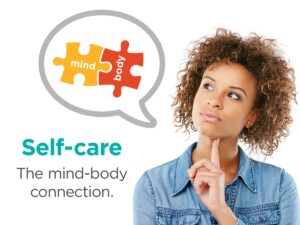 “Sometimes we experience our emotions as physical feelings in our bodies, like fatigue, achiness, an upset stomach, or a racing heart. There’s nothing ‘wrong’ with us, it’s just an uncomfortable emotion,” she says. “I like to think of it as our bodies’ way of getting our attention to say, ‘Something that you probably care about is happening.’ We can learn ways to pick up on these signals, strategies for calming our bodies in the middle of emotional reactions, and how to use the information to change what’s causing the discomfort in the first place.”
For example, let’s say you’re anxious about something about work. You can work on the issue top-down: enforce a timeline, talk to your boss. But you can also ease some of the discomfort you feel in your body, with deep breathing, a warm cup of tea, exercising – “all the things our bodies know we like.”
Other aspects of self-care include:
- Physical care – drinking water, nutritious food, exercise
- Mindful relaxation – using a lot of different methods – intellectual, interpersonal, listening, creative, smells, images
- Self-compassion and purpose – kindly acknowledging your own challenges and connecting your actions to the things that matter most to you
- Engaging in supportive self-talk
- Supportive relationships – spending time with people who are good to you
- Supportive structure – maintaining a manageable schedule; organizing your work area
“A lot of these things we do naturally, such as take a multivitamin,” she says. “But when we do them mindfully, intentionally, it becomes a sign to ourselves and others that we care about ourselves, which can feel good,” she says. “But sometimes we need to plan ahead a lot of self-care – such as scheduling time with your friends, and time to relax.”